
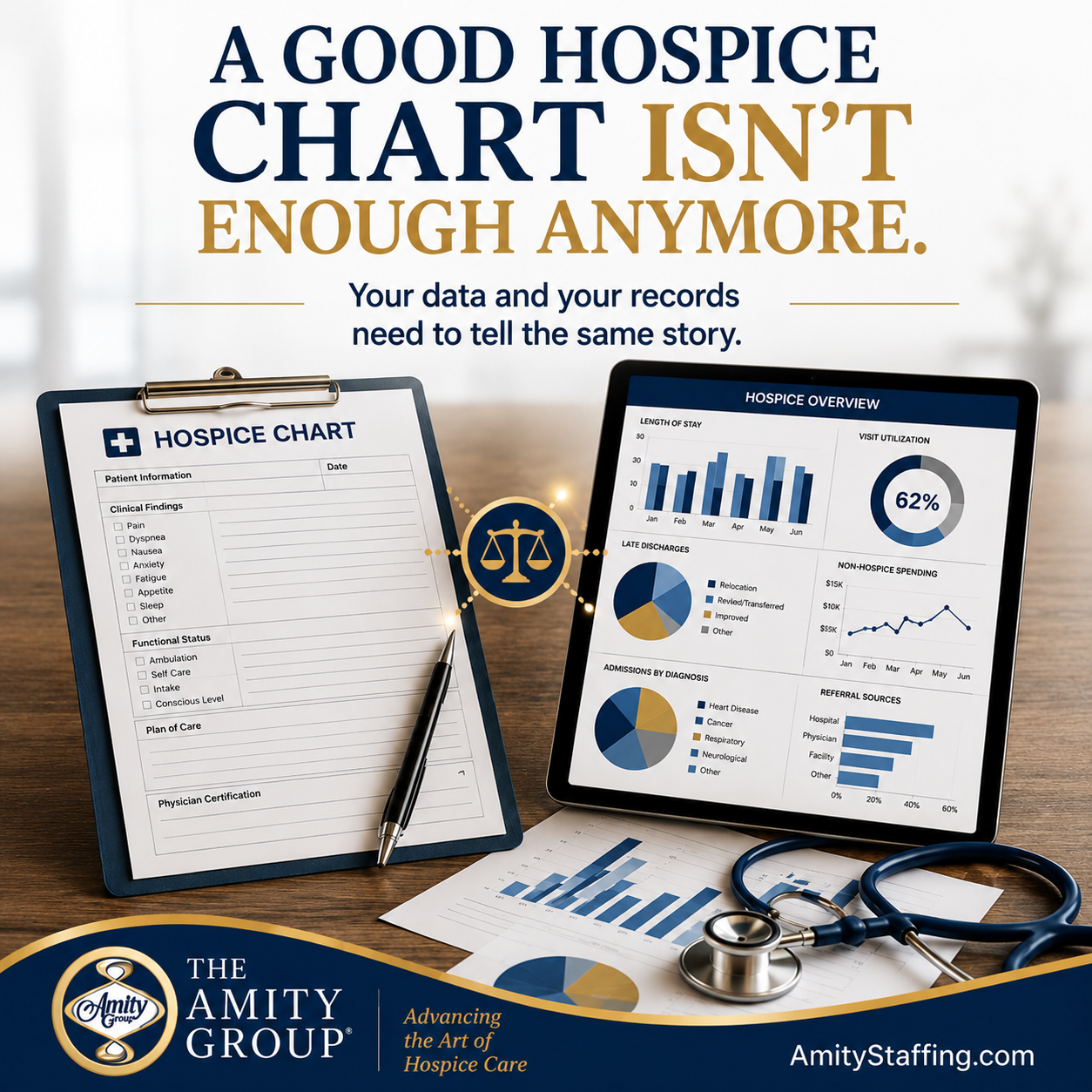
None of that is becoming less important. If anything, strong hospice documentation matters more than ever. But I think there is another piece of compliance that hospice leaders need to start paying much more attention to, because you can have a perfectly defensible individual chart and still have organization-level data that attracts government attention.
The federal government is becoming increasingly sophisticated in the way it uses data to identify unusual patterns. The Department of Justice’s August 24 announcement of its new National Fraud Detection Center is another example of that direction. The center is designed to combine data, investigative resources, and information from multiple government agencies to identify potential fraud across taxpayer-funded programs. DOJ has also specifically emphasized the use of advanced data-driven investigative techniques as part of its broader fraud enforcement strategy.
For hospice, that means we need to stop thinking about compliance exclusively as a chart-by-chart exercise. The individual medical record is one piece of the picture. Your agency’s overall data is another.
A Beautiful Chart Doesn’t Make an Unusual Pattern Disappear
Let’s say I audit one of your patients and the record is excellent. The certification is individualized, the nursing documentation clearly supports the terminal diagnosis, the patient’s functional limitations are well documented, the symptom burden is evident, and the record consistently supports continued hospice eligibility.
That’s exactly what I want to see.
But that one excellent record doesn’t tell me what is happening across the rest of your organization. It doesn’t tell me whether your length of stay is dramatically different from other hospices in your market, whether your live-discharge rate has suddenly changed, whether your utilization is unusual, or whether there are patterns involving non-hospice spending, referrals, readmissions, diagnoses, or other claims activity.
None of those patterns automatically mean you’re doing anything wrong. That’s an important distinction. Hospice populations are different, markets are different, referral sources are different, and patient needs are different. There are many legitimate reasons why one hospice may look different from another.
But if your agency is an outlier, you need to understand why. A good individual chart doesn’t erase an agency-wide pattern that may cause someone to look more closely.
The Data May Be What Brings Them to the Chart
This is the shift I think hospice leaders really need to understand. We traditionally think of the chart as the beginning of an audit. Increasingly, the data may be what causes someone to request the chart in the first place.
Government agencies have access to enormous amounts of claims and provider data. They can look at utilization across organizations, compare providers, identify changes over time, and potentially identify patterns that would be almost impossible to see by reviewing individual medical records one at a time.
That changes the order of things. Instead of someone randomly selecting a chart and discovering something unusual, analytics can potentially identify the unusual pattern first. Then the records are requested to determine what is behind it.
This is why I think hospice leaders need to be asking two different compliance questions. Is this patient’s medical record defensible? And does our organization-level data make sense when viewed as a whole?
You need to be able to answer both.
Your Data Creates Expectations About What Should Be in the Record
This is where data and documentation begin to intersect.
If your agency has unusually high visit utilization, there may be a perfectly legitimate clinical reason. Maybe you’re caring for a higher-acuity population with significant symptom burden. Maybe your patients require frequent medication adjustments, wound care, respiratory interventions, or crisis management. If that’s what’s happening, I would expect the medical records to show me that clinical complexity.
If your hospice has a longer length of stay, that isn’t automatically a problem either. But when I go into those longer-stay records, I would expect to see continued documentation supporting why those patients remain eligible for hospice.
The same applies to live discharges. If your live-discharge rate is changing, leadership should understand why patients are leaving hospice and whether those records tell the same story as the data.
Some areas I would be watching include:
- Length of stay and changes over time
- Live discharges and the reasons for those discharges
- Discharges followed by readmission
- Visit utilization and intensity
- Non-hospice Medicare spending
- Admission and diagnosis patterns
- Referral concentrations
- Significant changes from one quarter or year to another
- Other areas where your organization is a significant outlier
The goal isn’t to make every number look average. That would completely miss the point. The goal is to know what your numbers are telling you and make sure the clinical reality behind those numbers is reflected in your medical records.
This Is Also Why Normal Documentation Can Become So Dangerous
This is one of the issues we see repeatedly when auditing hospice records. The patient may absolutely be appropriate for hospice, but the documentation doesn’t show it.
The nurse knows the patient. She sees how debilitated the patient is. She knows how much assistance the caregiver provides. She remembers the dyspnea that occurred three days ago and the medication changes that were made last week. Because she knows all of that, a note that says the patient is comfortable today may seem perfectly reasonable to her.
The auditor doesn’t know any of it unless it’s in the record.
Now add organization-level data to that equation. If your claims data creates a reason for someone to look more closely at your hospice and the records they request are filled with documentation describing patients as stable, comfortable, eating well, having no pain, experiencing no distress, and showing very little clinical evidence of terminal disease, you have created a much harder argument for yourself.
That doesn’t mean nurses should exaggerate decline or manufacture symptoms. Absolutely not. It means the documentation needs to accurately describe the patient’s complete clinical picture and connect the findings to the terminal disease and hospice interventions being provided.
AI Makes This Something I Am Watching Even More Closely
There is another layer to this that concerns me right now, and that’s the increasing use of AI-generated clinical documentation.
AI can be incredibly useful, but we’re starting to see problems when hospice organizations rely too heavily on it to generate clinical notes. We’ve seen incorrect diagnoses appear in documentation, normal findings emphasized in ways that undermine eligibility, information added that the clinician did not intend to document, and notes that simply don’t tell the clinical story that needs to be told.
That creates a significant compliance risk because the nurse may know exactly what happened during the visit, but the auditor only knows what ended up in the medical record.
If you’re using AI-generated documentation, every clinician needs to carefully review the entire note before signing it. Leadership also needs an auditing process that identifies patterns in the documentation before those patterns become part of hundreds or thousands of records.
Technology can help us document. It cannot replace clinical judgment or accountability for what ultimately becomes part of the medical record.
Your QAPI Program Should Be Connecting These Two Worlds
This is where I think a strong QAPI program becomes incredibly valuable. QAPI should not live separately from compliance, auditing, and clinical operations. These pieces should be talking to each other.
If your organizational data identifies an unusual pattern, use targeted chart audits to understand what is driving it. If your chart audits repeatedly identify the same documentation problem, step back and determine whether that problem is showing up in your organization-level data as well.
That’s how QAPI becomes something useful rather than something we maintain because we’re required to have it. The numbers tell you where to look, the medical records tell you what is happening, and together they give leadership a much clearer picture of the organization.
A Strong Defense Still Comes Back to the Record
The government may increasingly use data to decide where to look, but once someone starts asking questions, your medical records still become incredibly important. That’s where you have to demonstrate what was actually happening with the patient and why the decisions made by the hospice were reasonable.
At The Amity Group, this is what our hospice audit nurses do every day. We review records for eligibility, documentation weaknesses, contradictions, and the issues that can create problems when a claim is reviewed. We also work with agencies that are already dealing with ADRs, denials, and appeals, which gives us the opportunity to see what is actually causing problems when records reach an outside reviewer.
That perspective matters because sometimes the biggest risk isn’t the thing everyone inside the agency is worried about. It’s the contradiction or pattern nobody noticed because they’ve been looking at the same records for months.
A good chart absolutely still matters. But a good chart isn’t the entire compliance picture anymore. Hospice leaders need to understand what their organization looks like in the data, make sure their medical records accurately support the clinical reality behind that data, and identify vulnerabilities before an outside reviewer does. Because your data may be what brings the government to your door, but your records are still going to be what you have to defend when they get there.
To learn more about The Amity Group’s hospice audit, compliance, and ADR support, visit AmityStaffing.com.
